Beyond The Brochure
Why the Security Screening Industry Is Focusing on Reliability, Usability, Real-World Performance and Operator-Centric Systems
In recent years, the global security X-ray market appears to have increasingly adopted more sophisticated terminology, acronyms, and technology-led messaging as manufacturers explore new ways to describe advances in imaging, automation, and operator-assistance tools. Artificial intelligence, machine learning, automated threat recognition, advanced analytics, predictive screening, and increasingly sophisticated operator-assistance — and in some cases operator-removal — technologies are now commonly referenced across product literature.
As technology continues to evolve, manufacturers across the industry are exploring new ways to improve detection capability, streamline workflows, and enhance operator efficiency through advanced imaging and intelligent software systems. At the same time, however, there appears to be a noticeable shift taking place within portions of the market itself.
From our perspective, customers are becoming more focused on operational outcomes rather than simply feature lists.
Increasingly, procurement teams, operators, and end users seem to be placing greater emphasis on long-term reliability, image usability, support structures, lifecycle cost, and the practical realities of operating screening equipment in demanding environments. In many ways, the industry appears to be moving away from purely specification-driven procurement and toward a more balanced evaluation of real-world operational performance.
As emerging threats continue to evolve in both form and concealment methodology, we believe clear, consistent, high-quality imaging remains central to effective detection. Most operational environments today still appear to place strong emphasis on practical imaging performance, operator experience, system reliability, and day-to-day usability rather than relying solely on systems driven entirely by predefined or manually input data models.
At HISSCO, we believe this represents an important and healthy evolution for the industry.
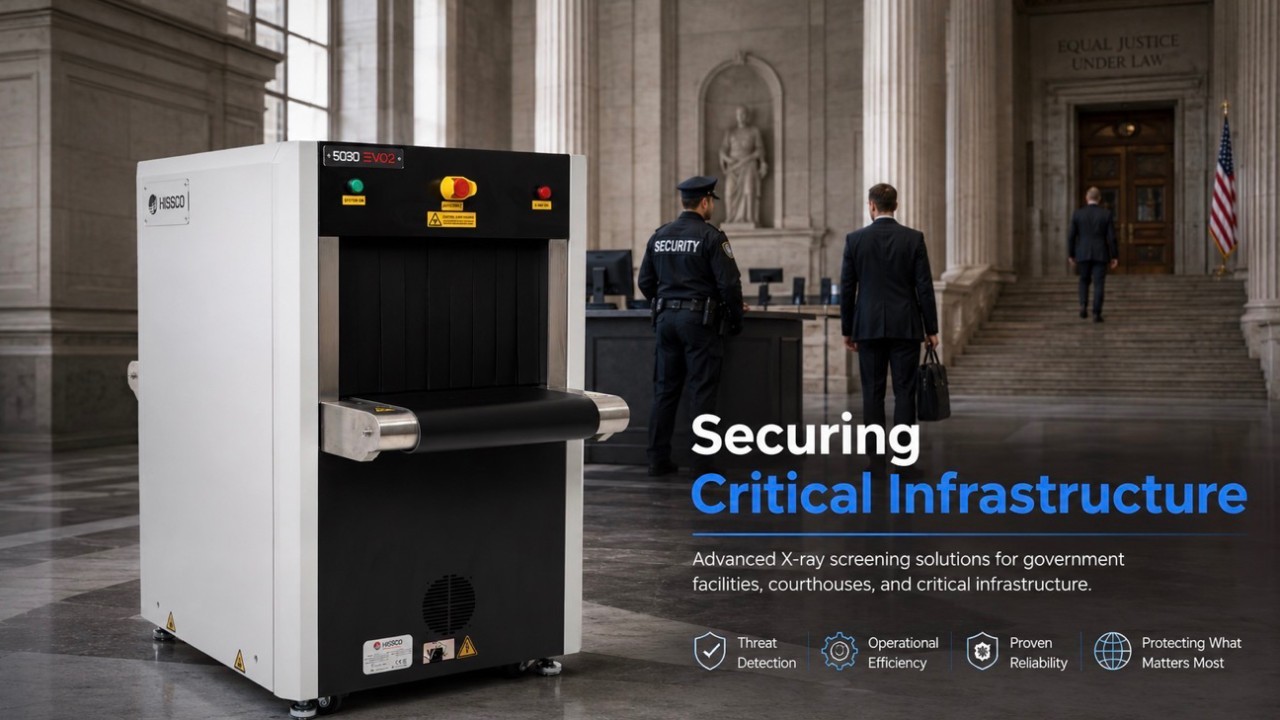
Conventional security X-ray systems continue to play a central role across airports, cargo facilities, ports, logistics operations, and critical infrastructure environments worldwide. While advanced automation technologies will undoubtedly continue to evolve, conventional imaging systems supported by experienced operators are likely to remain the focal part of real-world security screening operations for the foreseeable future.
The Growing Importance of Operator-Focused Technology
Despite rapid advances in software and imaging technologies, the operator should remain central to the screening process. Clear imaging, intuitive interfaces, stable software environments, and consistent system behaviour often appear to have just as much impact on operational effectiveness as raw technical specifications themselves.
At HISSCO, our approach has therefore focused heavily on image clarity, usability, reliability, and long-term operational simplicity. Through HISSCO’s trademarked AI-Assisted Imaging™ technology, our systems are designed to support operators by improving image presentation, assisting interpretation, and enhancing overall workflow efficiency without introducing unnecessary operational complexity.
Our objective is not to overwhelm operators with excessive automation or complicated software layers, but rather to provide intelligent imaging tools that support faster, more confident decision-making in real screening environments.
As the industry evolves, the balance between advanced technology and practical usability will continue to become increasingly important.
Reliability, Uptime, and Total Cost of Ownership
Another major shift within the market appears to be the growing emphasis on total cost of ownership rather than purely acquisition cost alone.
Today, customers seem to be looking far more closely at factors such as uptime, serviceability, spare part availability, platform longevity, warranty structures, and long-term operational support when evaluating screening systems. Increasingly, the conversation no longer appears to focus solely on procurement price at the point of purchase, but rather on the long-term operational cost of maintaining reliable screening capability over the lifecycle of the equipment.
This appears to be particularly important in high-throughput or remote operational environments where downtime can have significant operational and financial consequences.
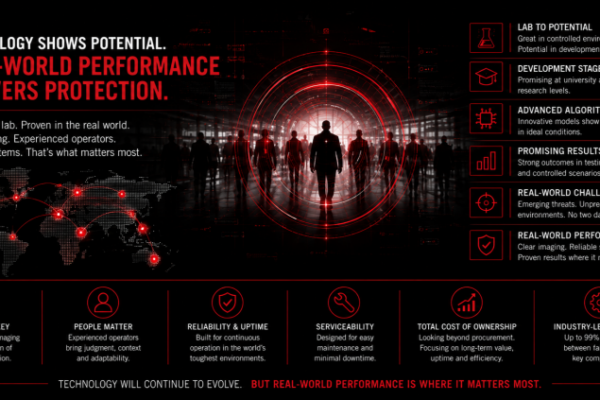
At HISSCO, our systems are engineered with a strong focus on reliability, maintainability, and operational continuity. With mean time between failure rates generally reaching up to 99% across key platform components, our emphasis is placed on minimizing downtime, simplifying servicing requirements, and supporting long-term operational stability in demanding real-world environments.
Combined with an industry-leading 5-year warranty structure and a strong focus on serviceability, this approach is intended to provide customers with predictable support, maximum uptime, and what we believe to be one of the lowest total costs of ownership within the market today.
Because ultimately, reliability is not simply a specification — it is an operational requirement.
A Market Increasingly Focused on Credibility
As the global screening industry continues to mature, credibility and transparency appear to be becoming increasingly important differentiators within the market.
Buyers are asking more detailed questions about operational performance, support capability, reliability, uptime, and long-term sustainability. Increasingly, they appear to be looking beyond marketing terminology and placing greater emphasis on whether systems consistently deliver the performance expected of them in real-world operating conditions.
Our philosophy remains straightforward: develop robust imaging systems, support operators through intelligent technology, maintain long-term reliability, and provide equipment that performs consistently in the environments where it matters most.
Because ultimately, real-world performance will always speak louder than marketing alone.
Related Posts